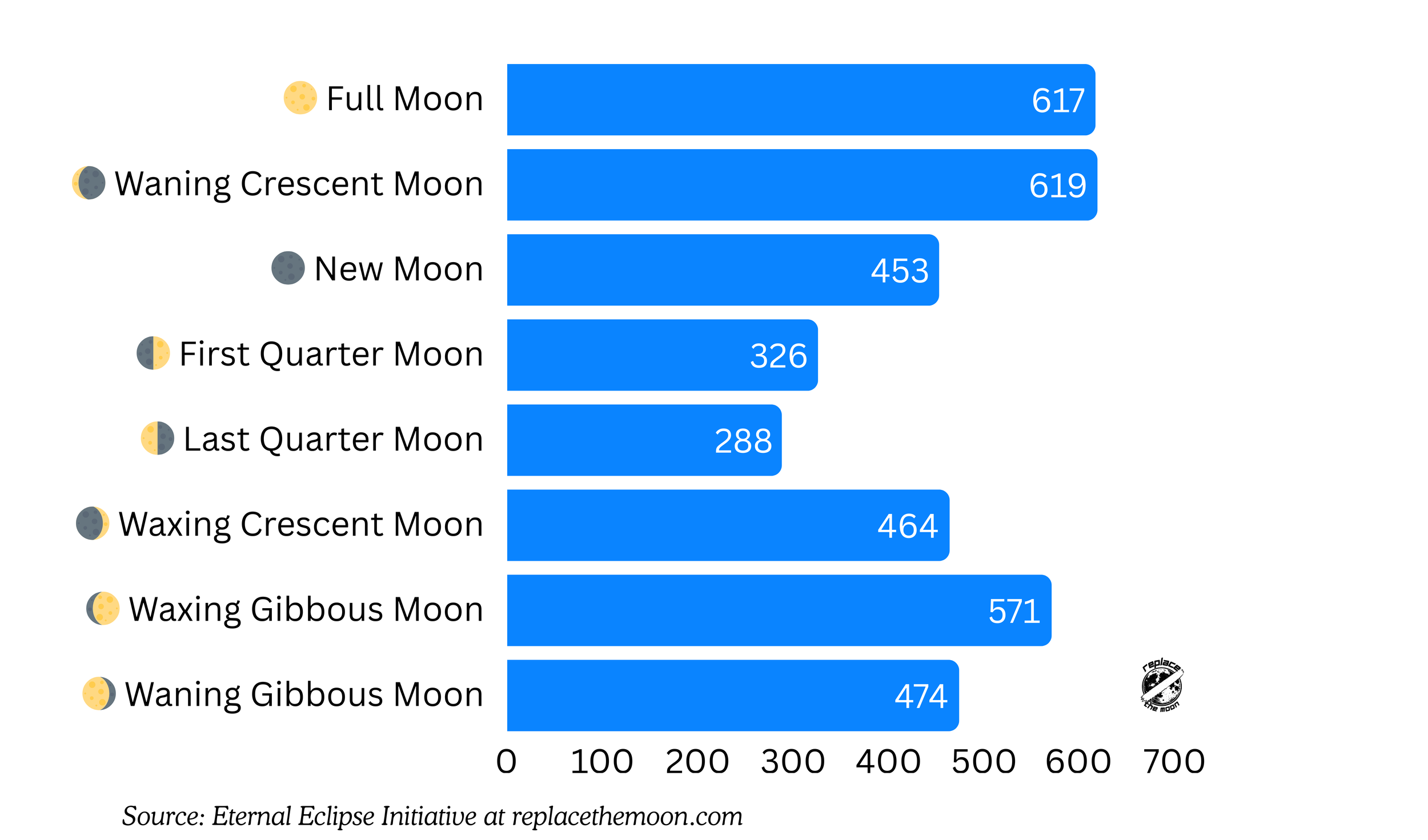
Facts & Figures…
there is data to support The Eternal Eclipse Initiative
Wear Your Data
Heavyweight Cotton T
A serious chart.
About something that does not require one.
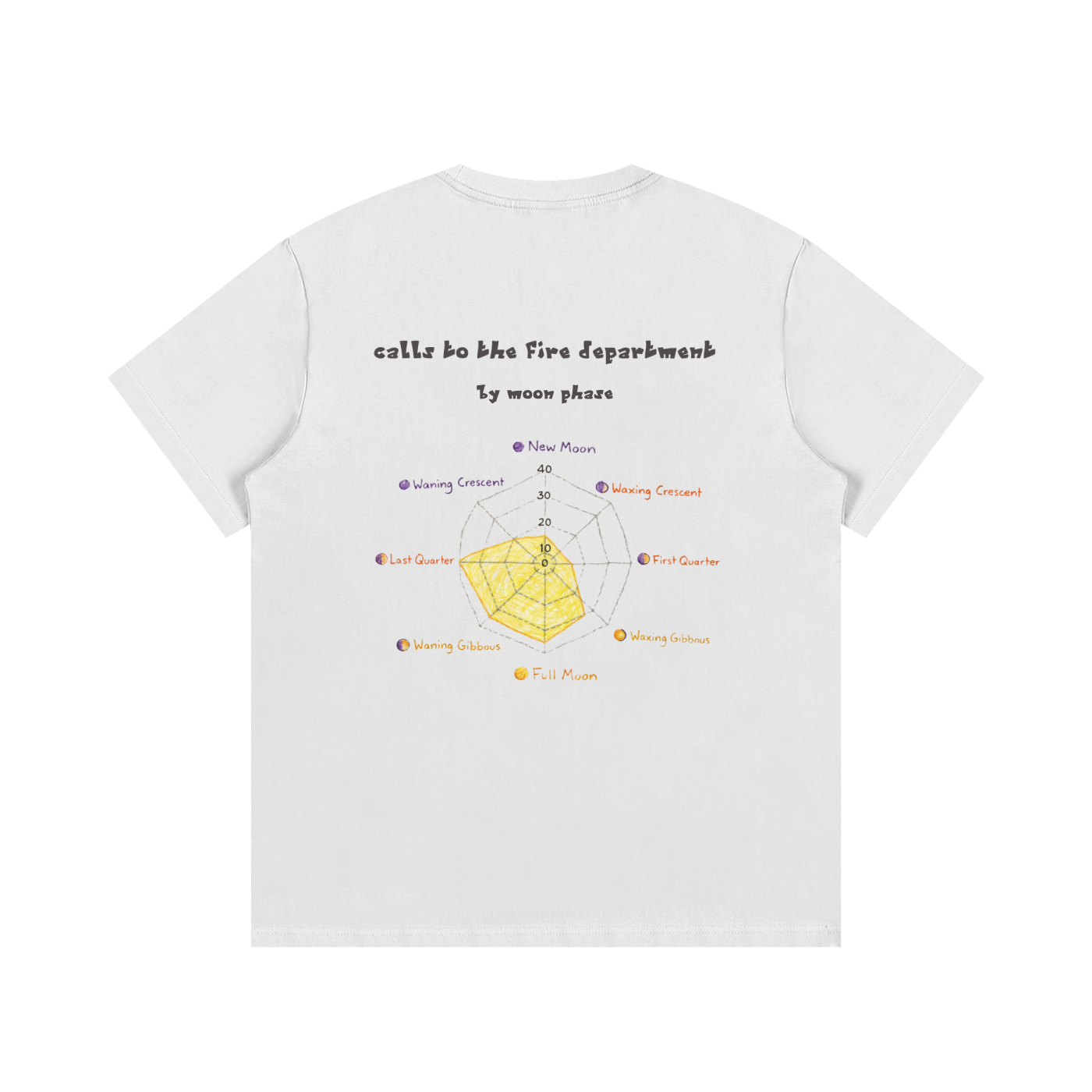
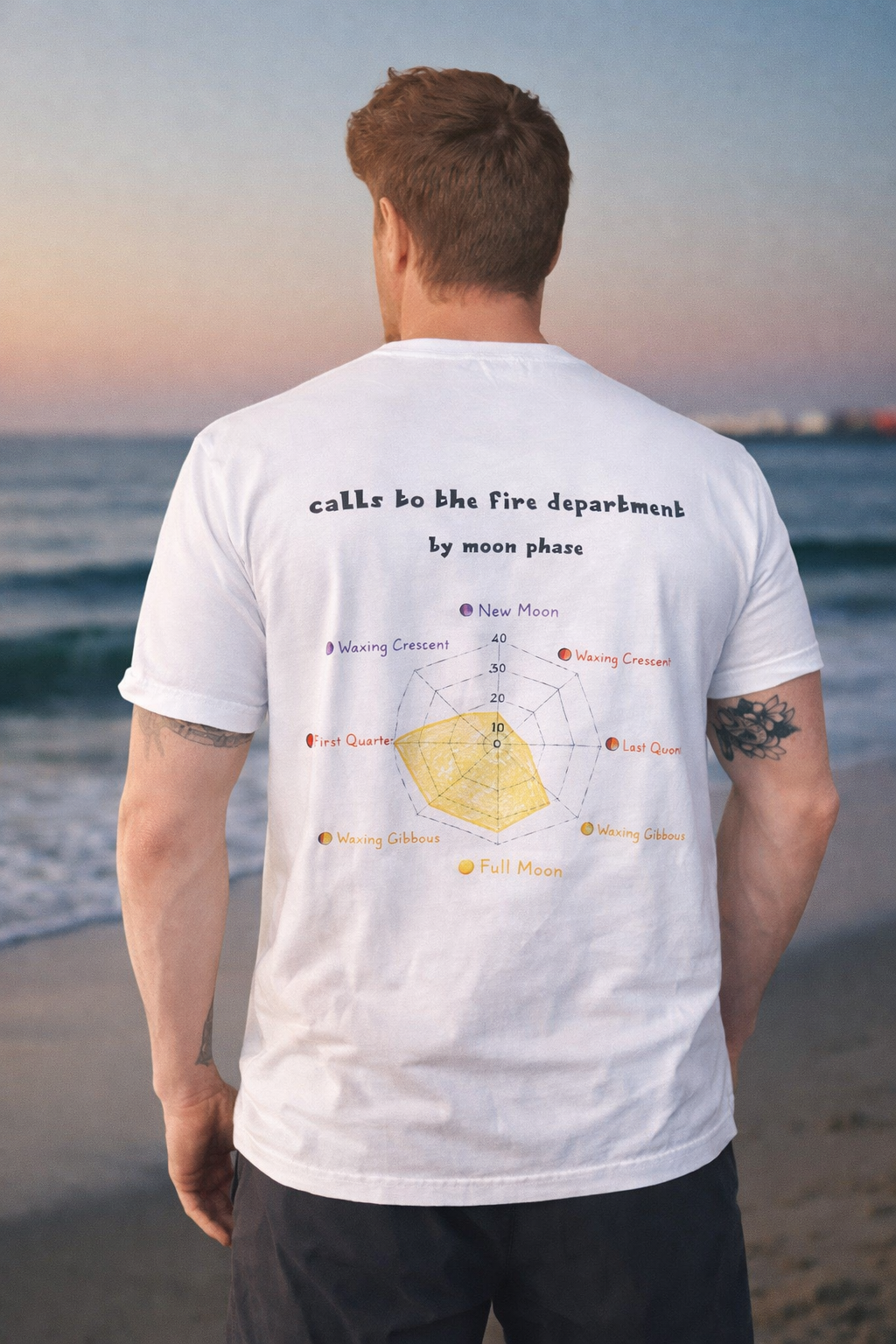
“Calls to the fire department by moon phase” presents the data plainly and without apology. Radial axes. Percentages. Clean labels. A full attempt at correlation. Whether the moon agrees is beside the point.
The shirt itself is substantial. Made from 100% cotton at 220 GSM, it has a dense, heavyweight feel that holds its structure without stiffness. The fabric feels solid in hand, smooth against the skin, and built to last. It drapes cleanly, sits steady on the shoulders, and keeps its shape through repeated wear.
This isn’t a thin novelty tee.
It’s a thick cotton shirt carrying very important nonsense.
Details
100% cotton
220 GSM heavyweight fabric
Thick, structured feel
Short-sleeve crewneck
Durable graphic print
Unisex sizing
Fit note: Structured heavyweight fit. Choose your usual size for a standard silhouette.
Heavyweight Cotton T
A serious chart.
About something that does not require one.
The shirt itself is substantial. Made from 100% cotton at 220 GSM, it has a dense, heavyweight feel that holds its structure without stiffness. The fabric feels solid in hand, smooth against the skin, and built to last. It drapes cleanly, sits steady on the shoulders, and keeps its shape through repeated wear.
This isn’t a thin novelty tee.
It’s a thick cotton shirt carrying very important nonsense.
Details
100% cotton
220 GSM heavyweight fabric
Thick, structured feel
Short-sleeve crewneck
Durable graphic print
Unisex sizing
Fit note: Structured heavyweight fit. Choose your usual size for a standard silhouette.
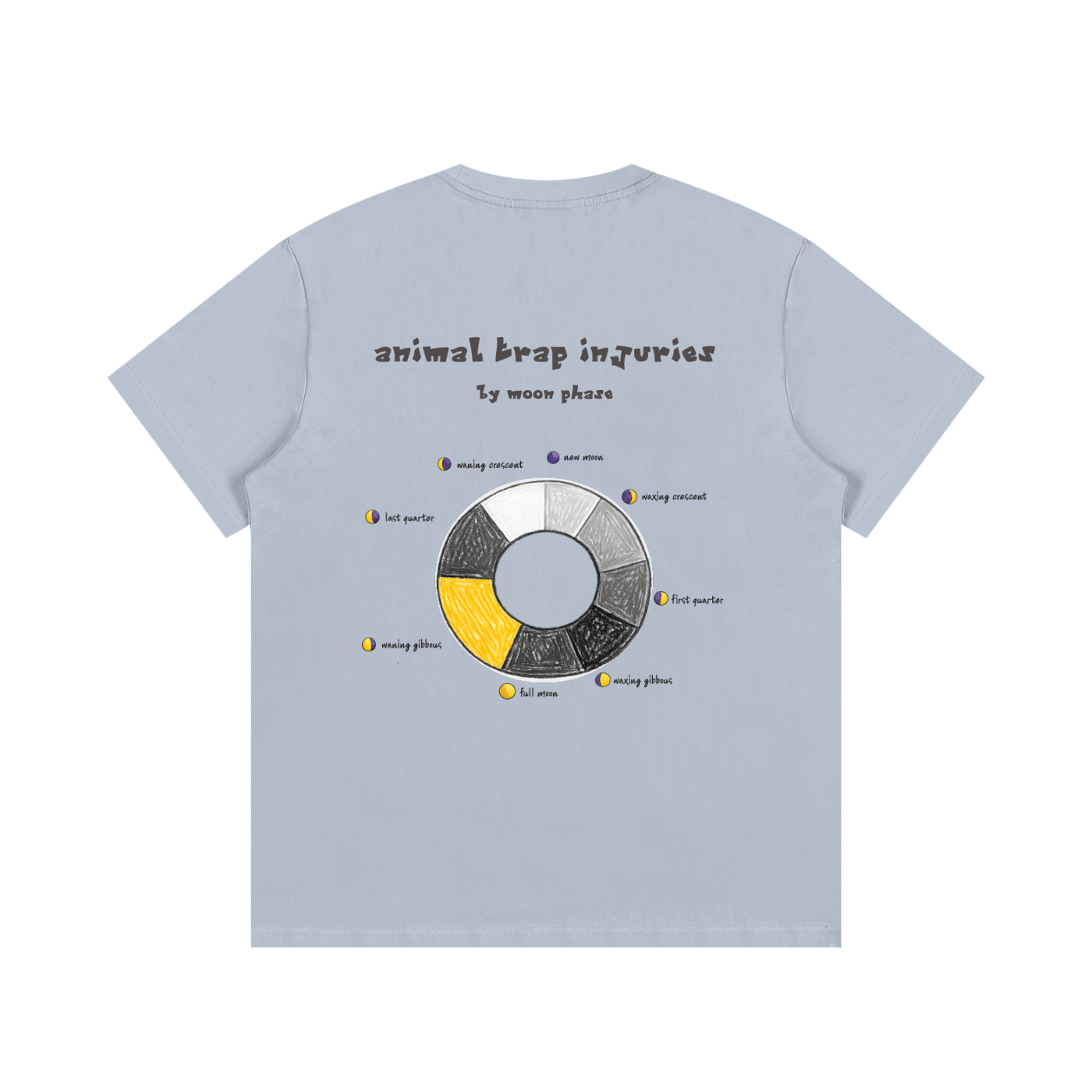
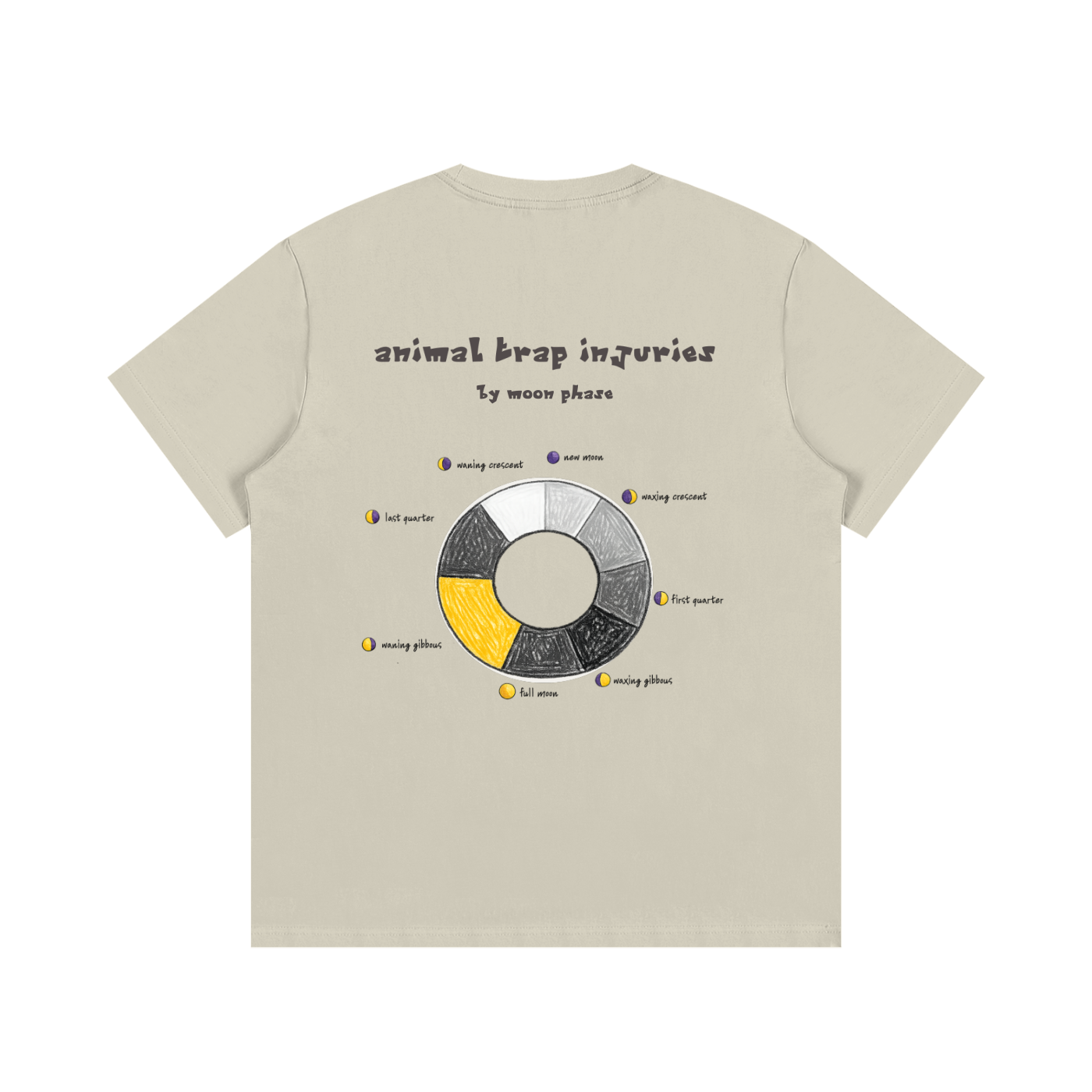
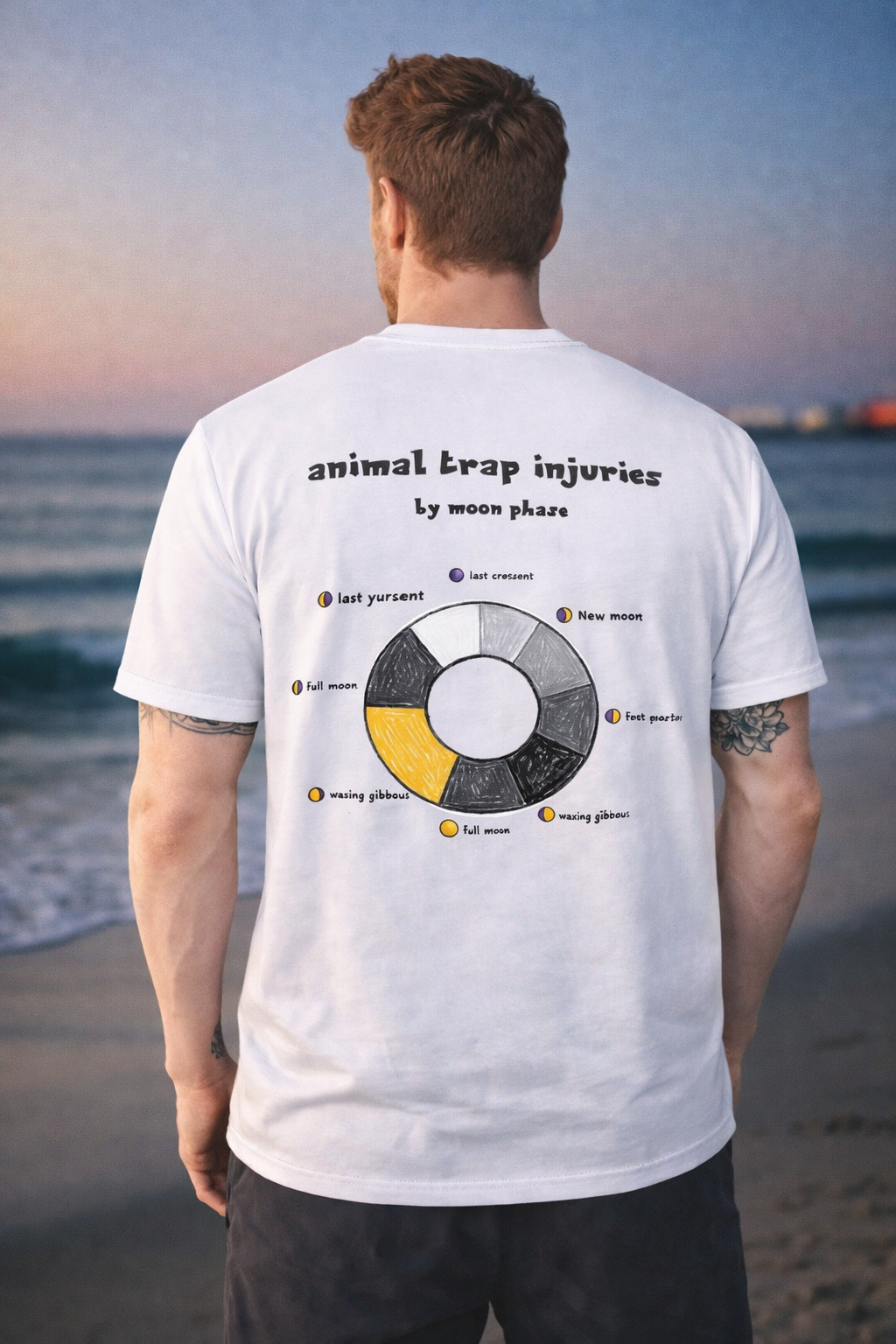
Heavyweight Cotton T
A serious chart.
About something that does not require one.
The shirt itself is substantial. Made from 100% cotton at 220 GSM, it has a dense, heavyweight feel that holds its structure without stiffness. The fabric feels solid in hand, smooth against the skin, and built to last. It drapes cleanly, sits steady on the shoulders, and keeps its shape through repeated wear.
This isn’t a thin novelty tee.
It’s a thick cotton shirt carrying very important nonsense.
Details
100% cotton
220 GSM heavyweight fabric
Thick, structured feel
Short-sleeve crewneck
Durable graphic print
Unisex sizing
Fit note: Structured heavyweight fit. Choose your usual size for a standard silhouette.
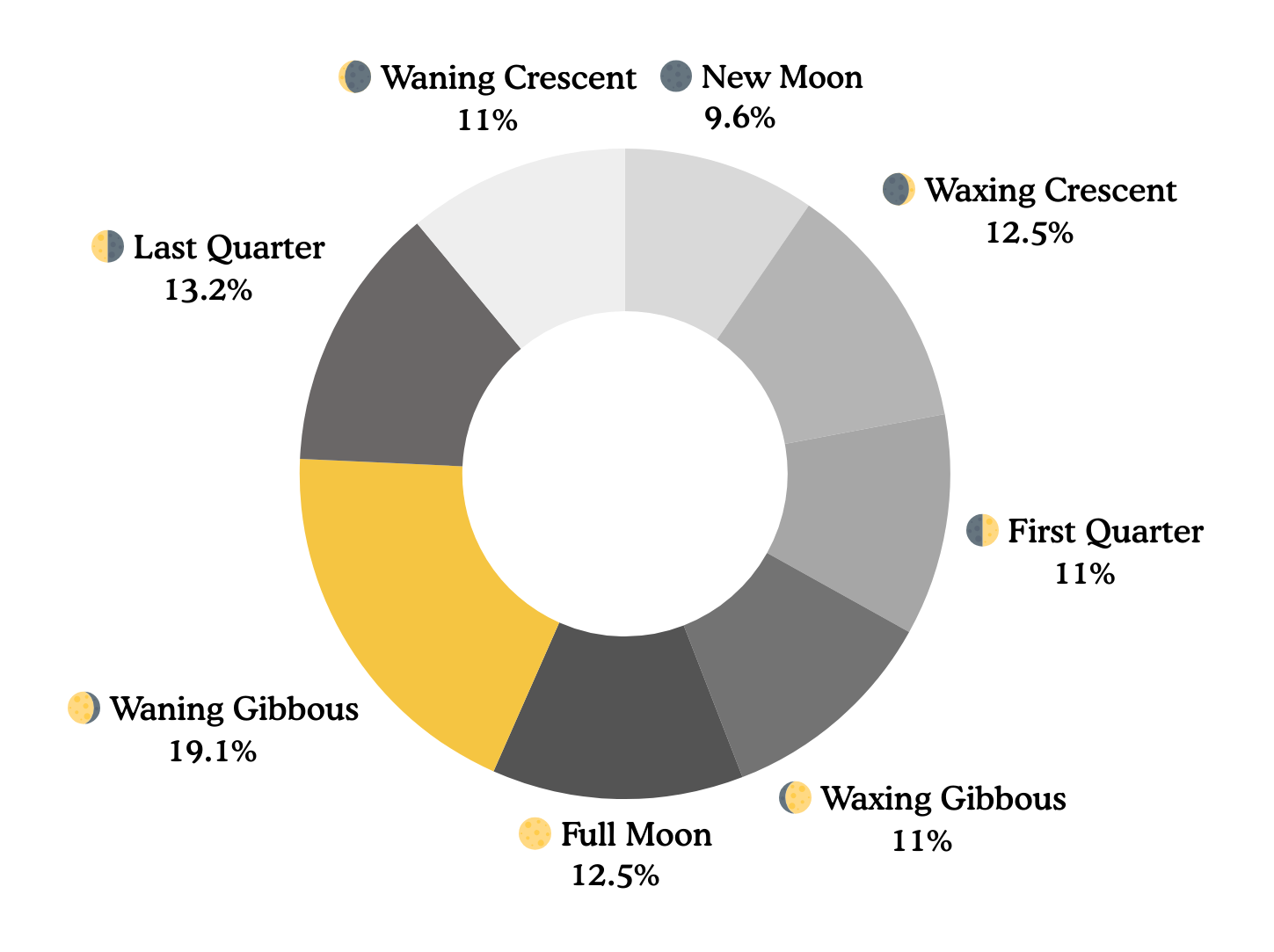
Calls to the fire department
According to the data, the Waning Gibbous is a problem.
Not a cause, per se, but statistically… vibes-adjacent.
Is this correlation? Causation? Lunar judgment? Impossible to say. What is clear is that the Waning Gibbous once again emerges as the most suspicious phase—looming quietly above the noise, smugly outperforming its peers.
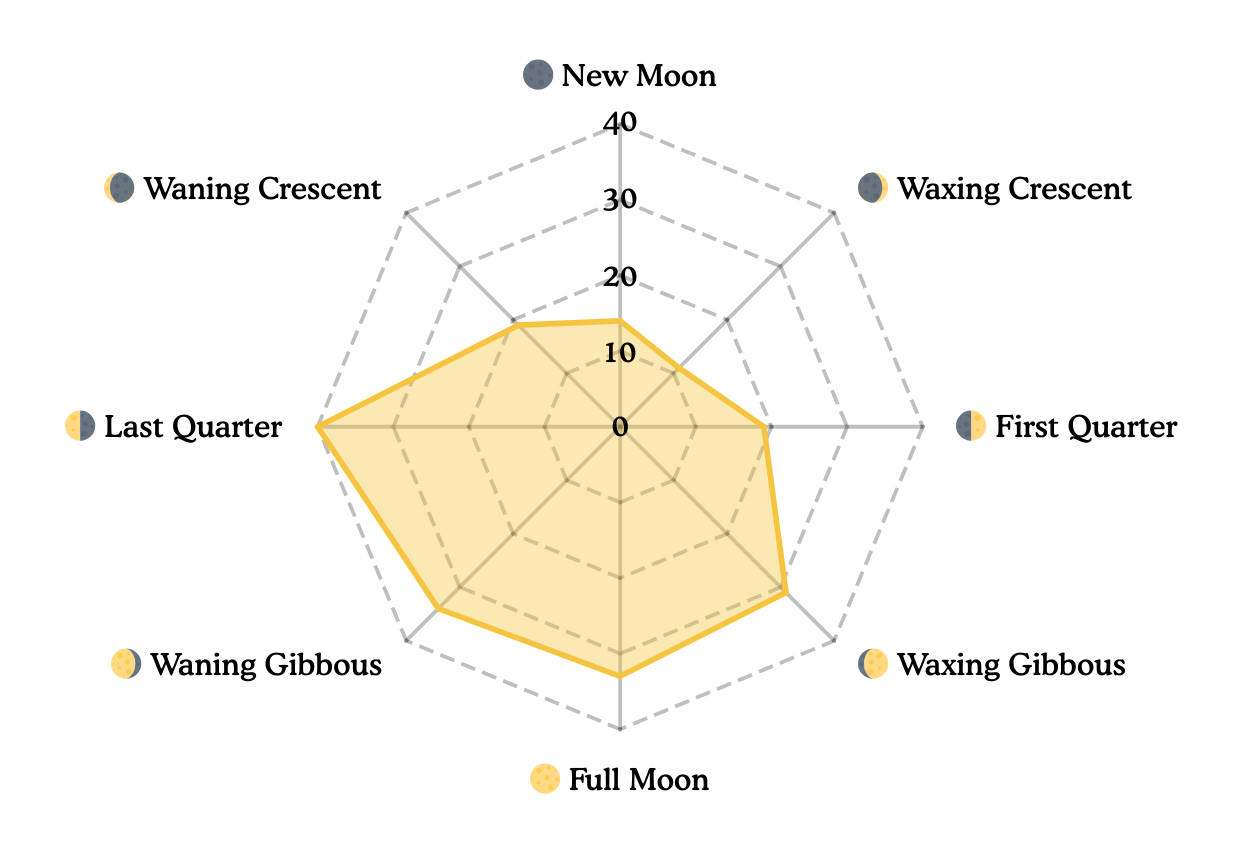
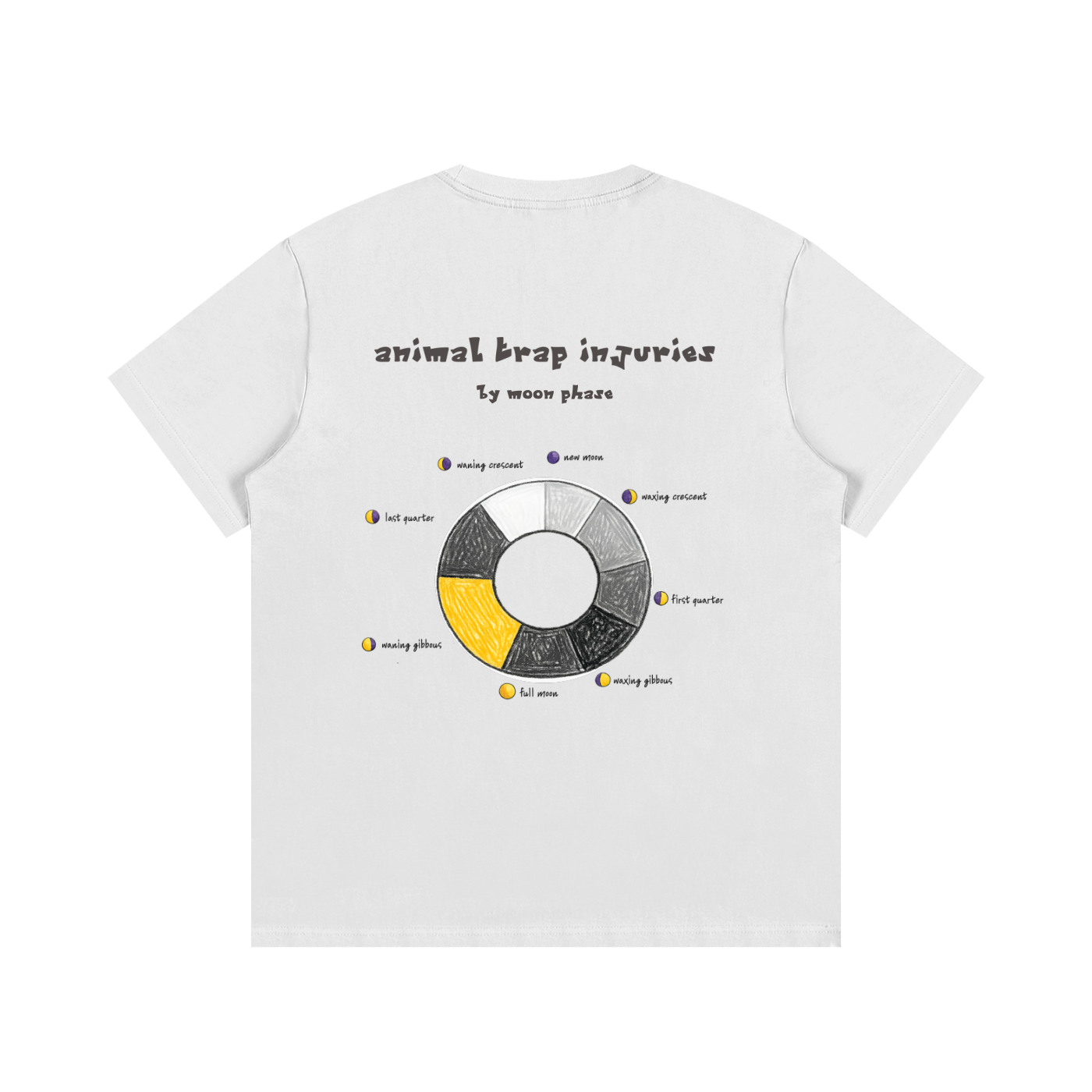
Animal trap injuries
Apparently, people use animal traps and they are dangerous. Sending folks to the Emergency Department.
Animal trap injuries occur about 53% more often than expected during the waning gibbous phase compared to an even (random) distribution across all moon phases. Coincidence? Confirmation Bias? False Correlation? Nope. The Moon.
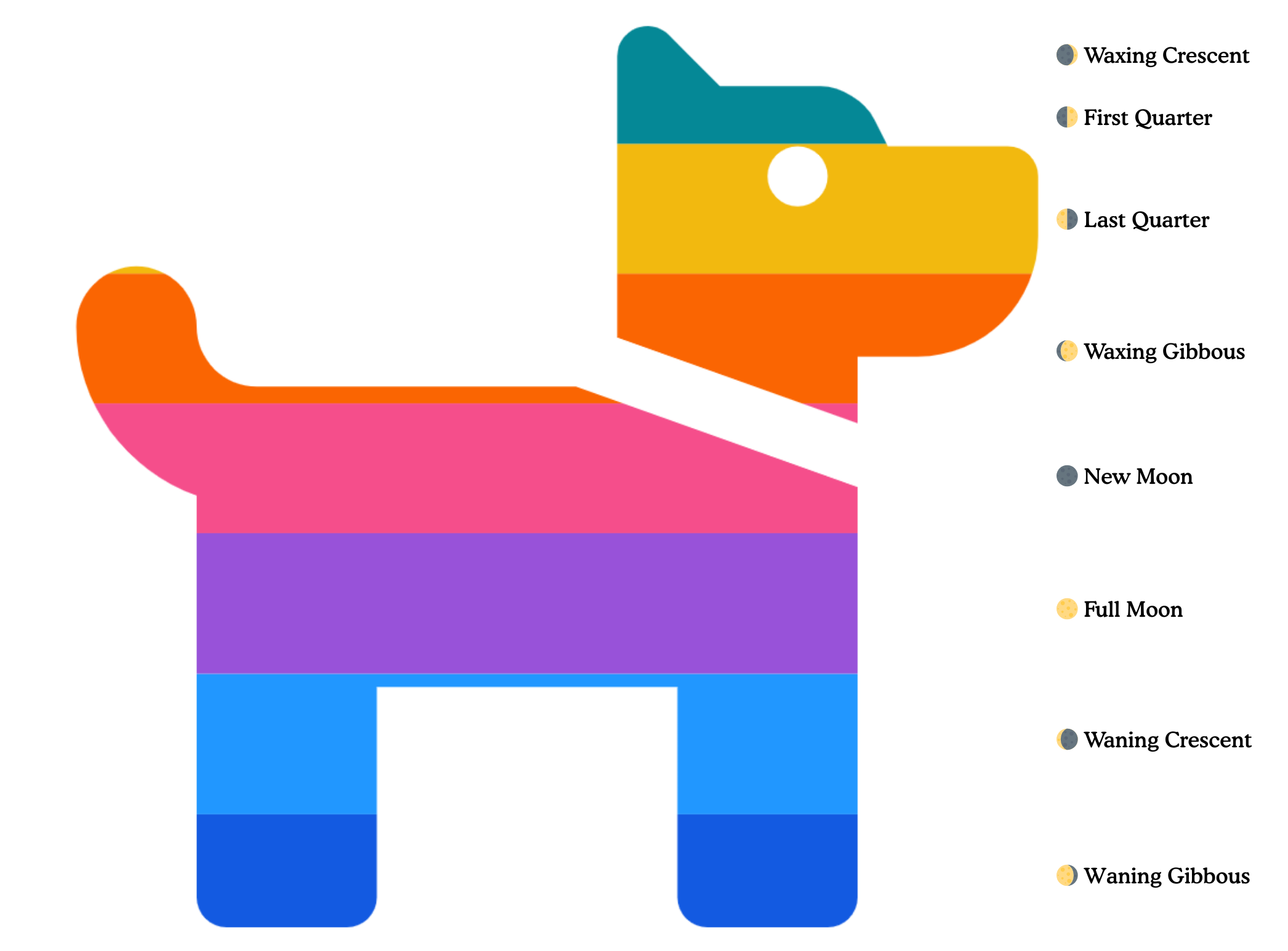
Angry Staten Island dogs
During 2024, Staten Island residents were 15% more likely to suffer a dog bite during a Waning Gibbous than during the average of other moon phases.
The chart is nearly impossible to interpret. The colors argue with each other. The legend offers no comfort. Still, the conclusion emerges somehow.
The Waning Gibbous is present.
And the dogs of Staten Island, apparently, can tell.
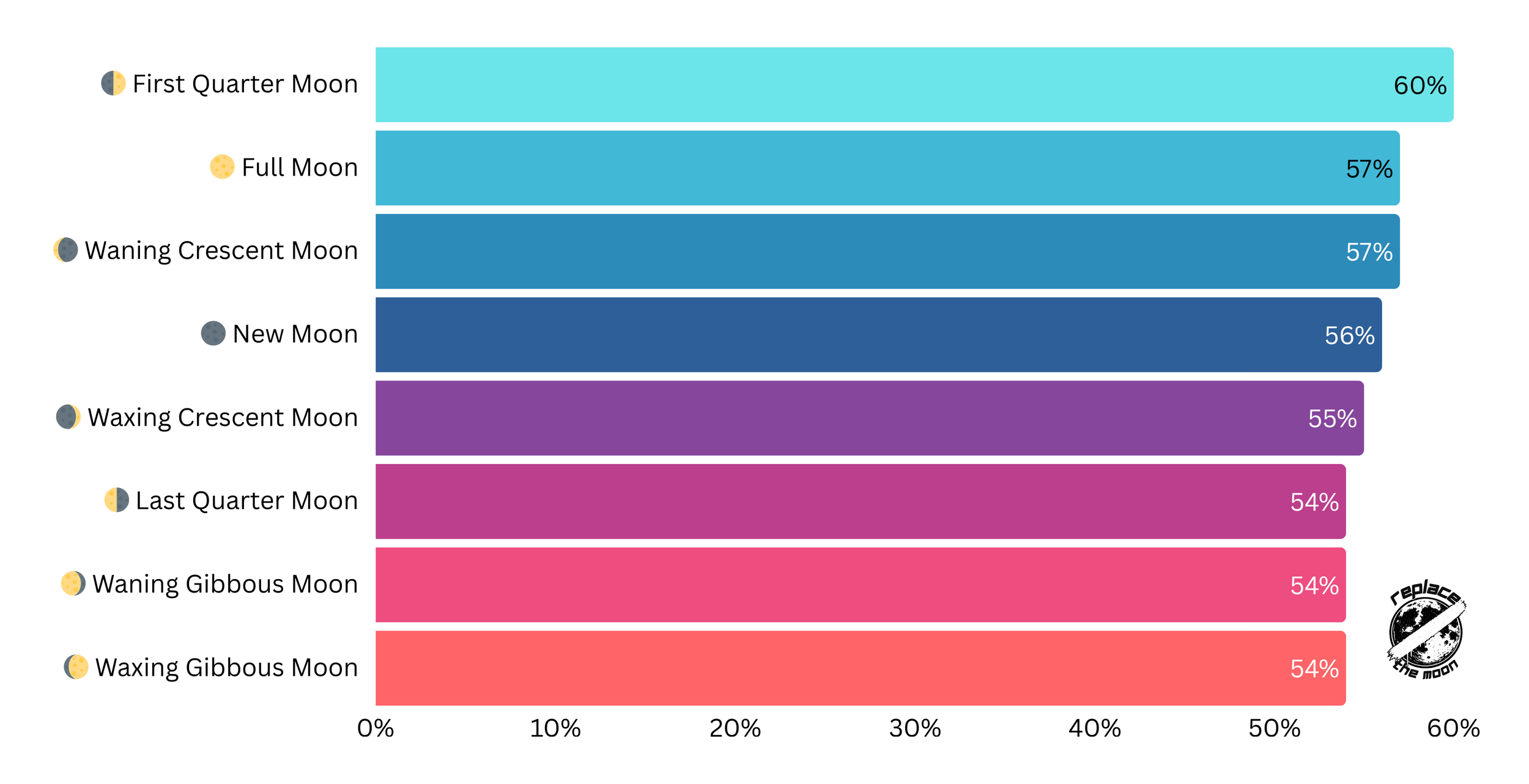
NFL Home Team Win %
Home teams win most often during First Quarter Moon games, posting a 60% win rate, roughly five to six points higher than during the lowest-performing moon phases.
This analysis does not control for team strength, travel distance, or scheduling effects, and should be interpreted as descriptive.
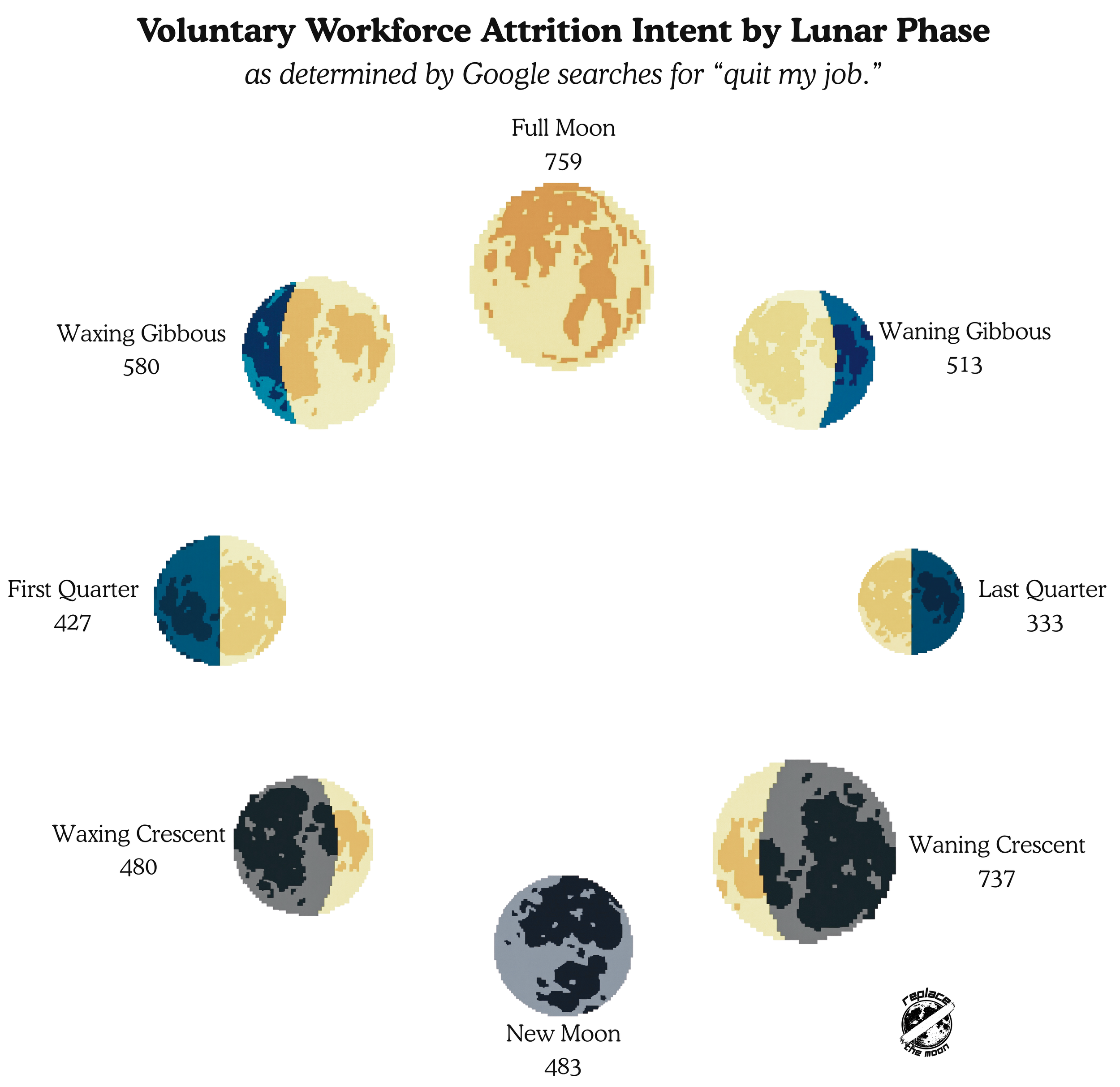
Voluntary Workforce Attrition Intent
Search behavior suggests workforce instability peaks under a full moon. As the moon waxes toward full, ‘quit my job’ search activity increases by roughly 30–50%, peaking at the full moon.
Reptile plane strikes
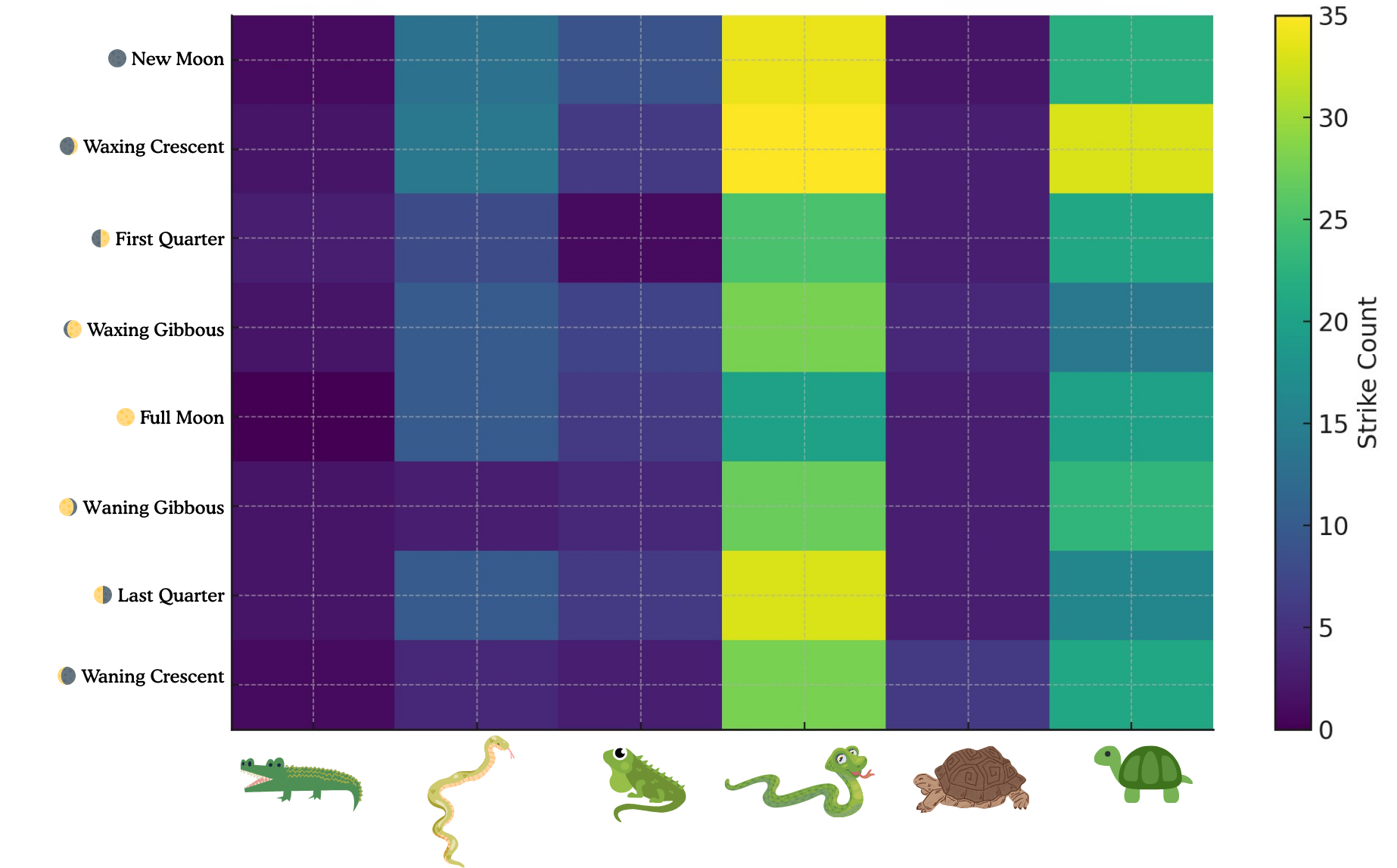
Reptiles near an airport during the Waning Gibbous are in danger. Just look at the data. Does this visualization prove much? Undecided. Does it strongly imply the moon is complicit? Unquestionably.
Snakes, in particular, are most vulnerable during a waxing crescent. Irrespective, this is grounds alone to replace the moon. Wouldn’t you agree?
Dancing related injuries
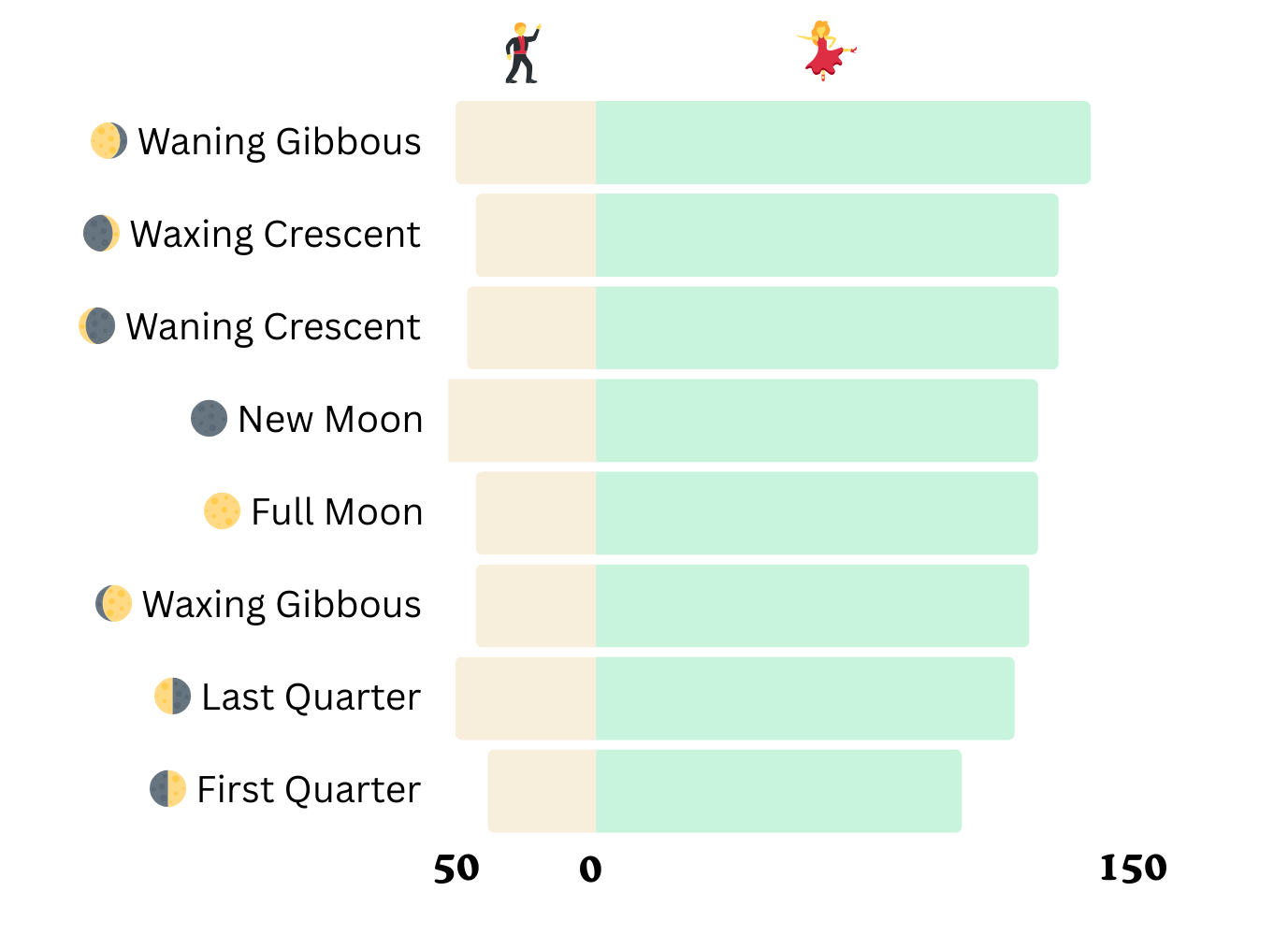
During a Waning Gibbous, women experience dancing-related injuries at roughly 3.5 times the rate of men. By injury, we mean heading to the Emergency Department. This is true.
The data provides no explanation. No context. Just a warning. Do not dance during a Waning Gibbous.
The Waning Gibbous does not dance. It watches.
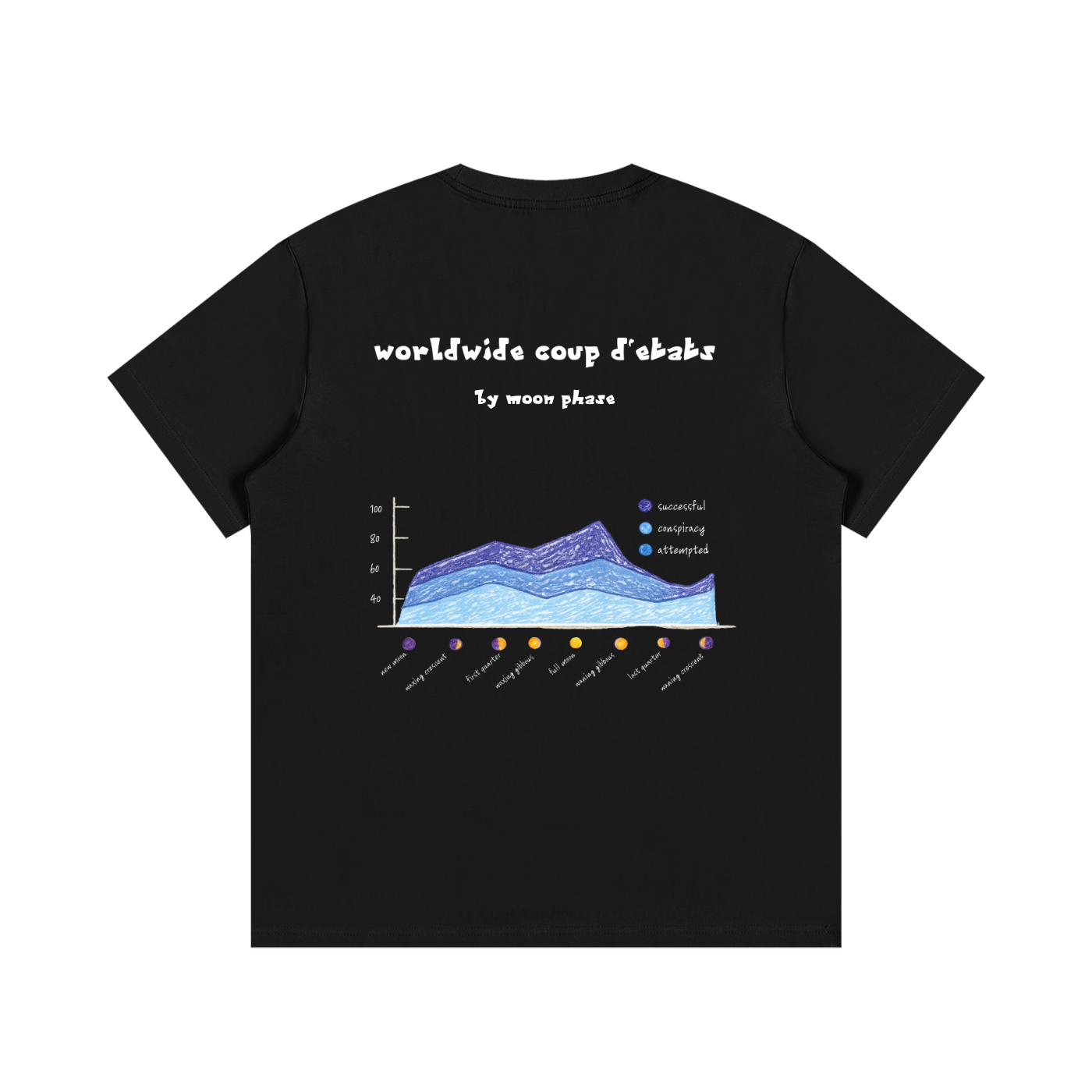
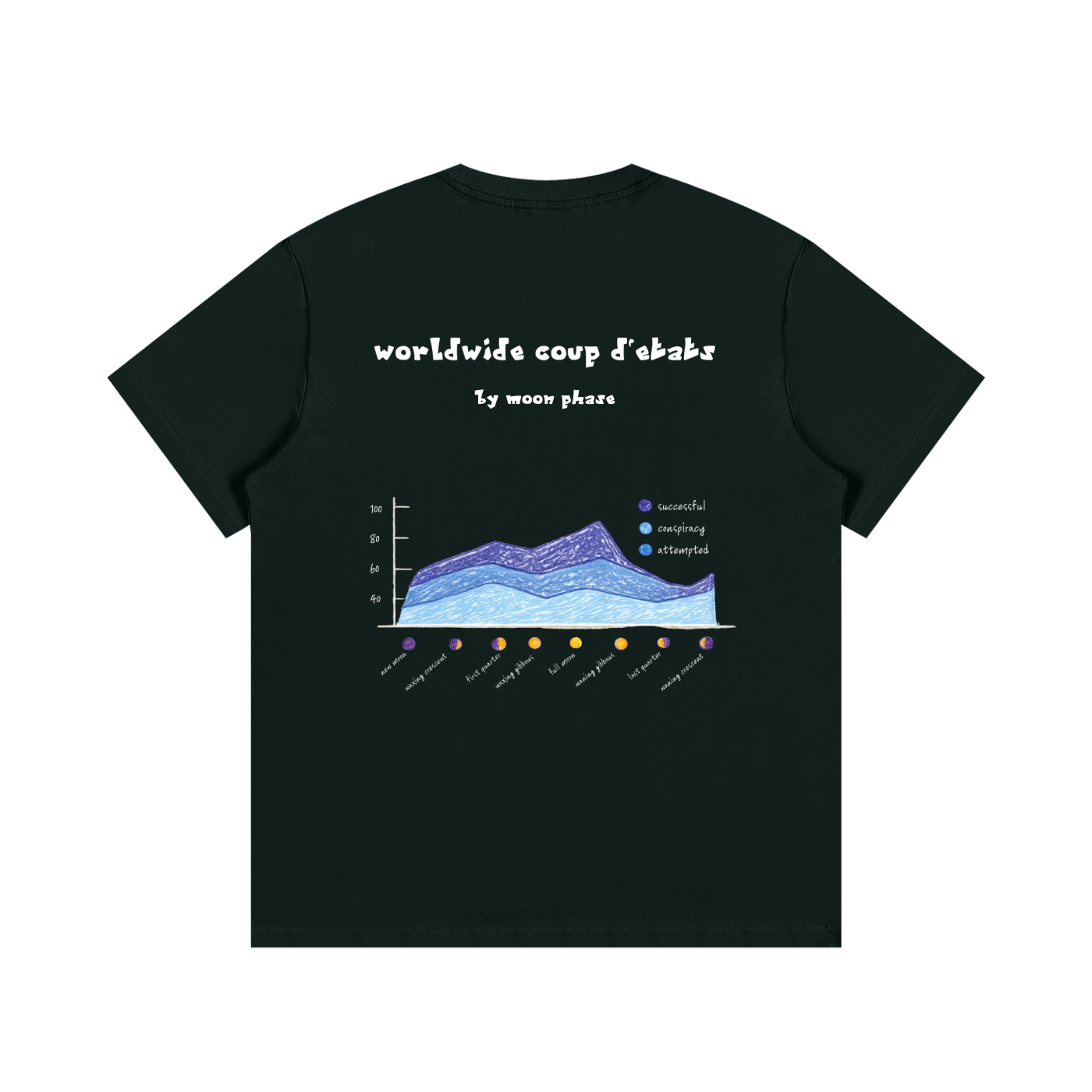
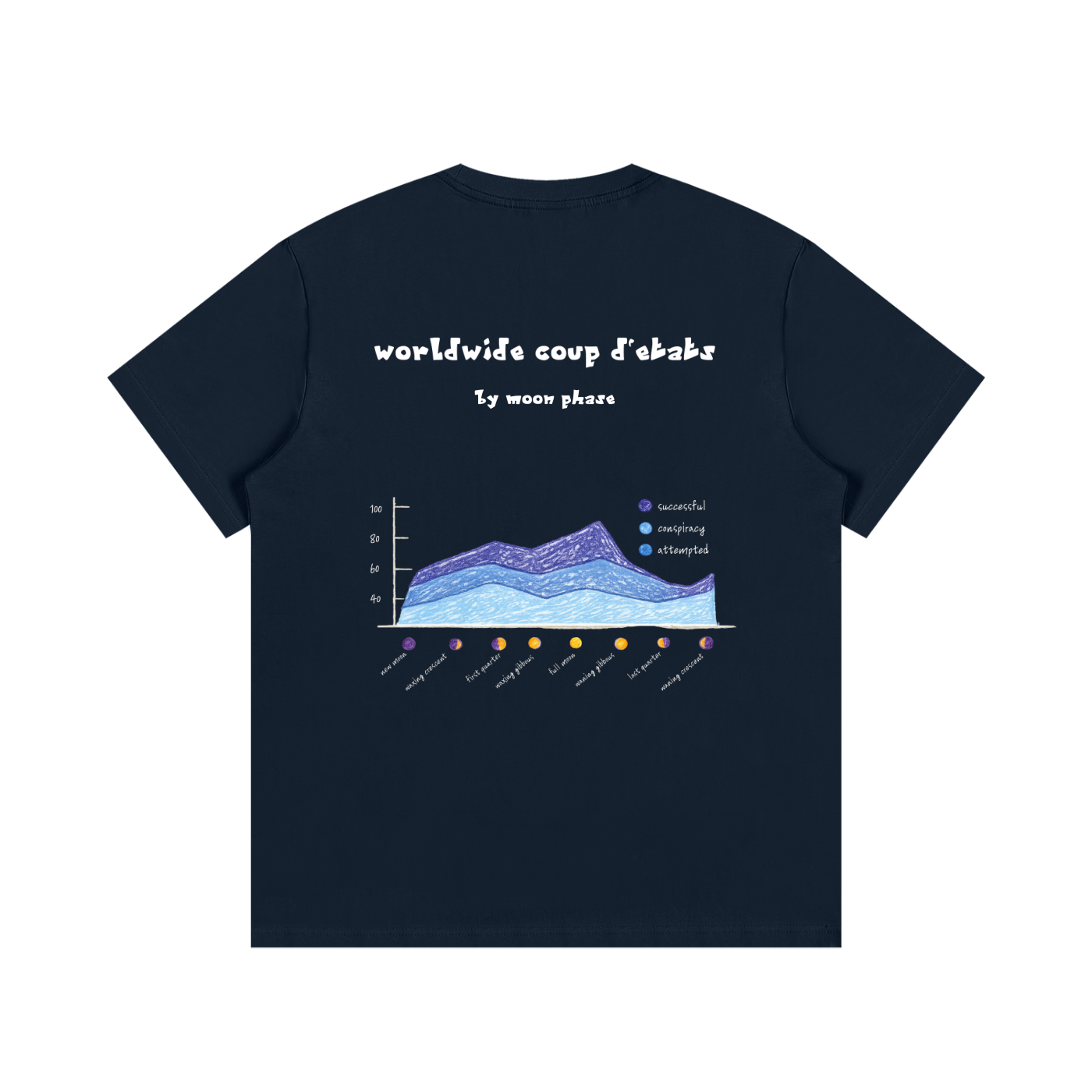
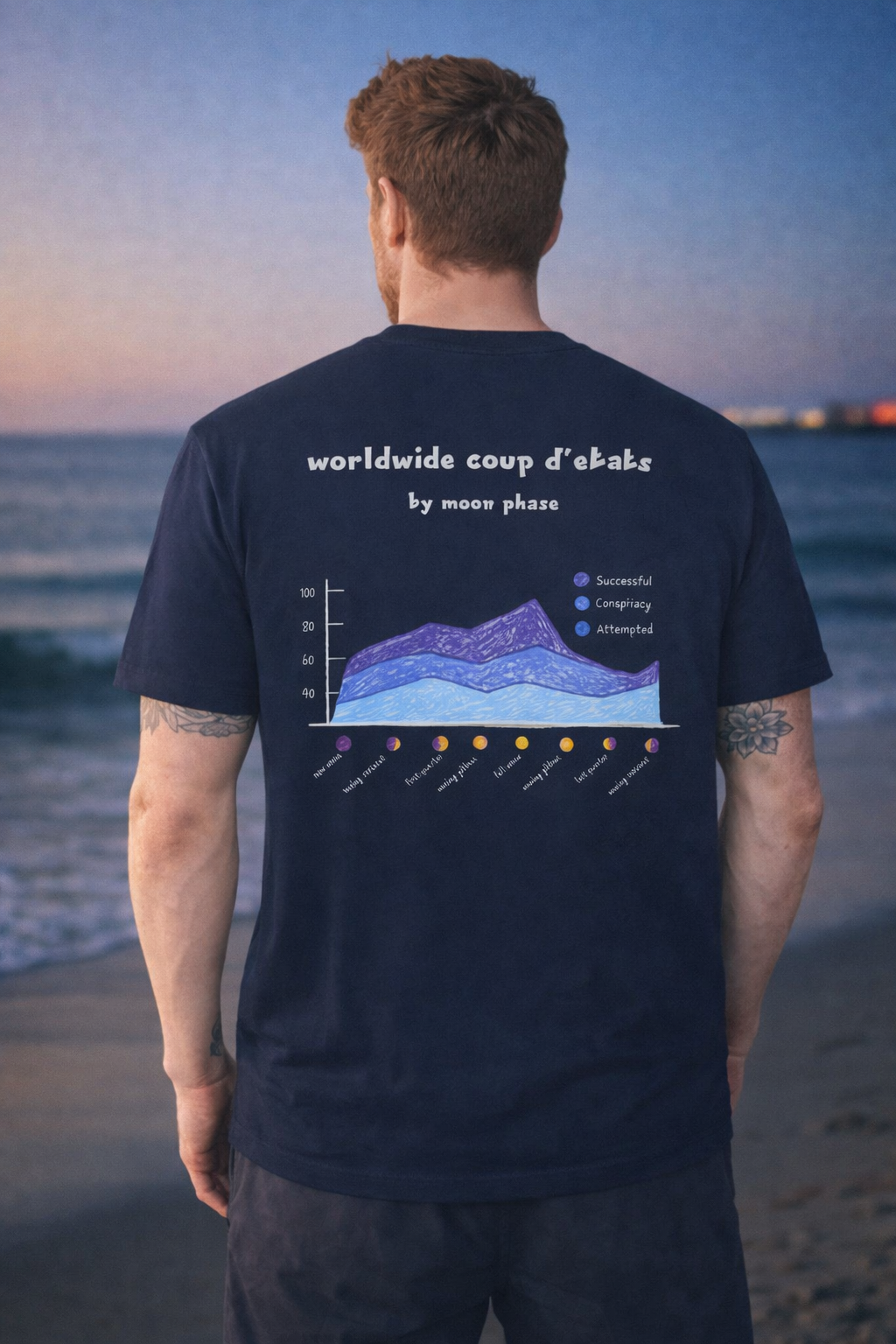
Worldwide Coup d’Etats
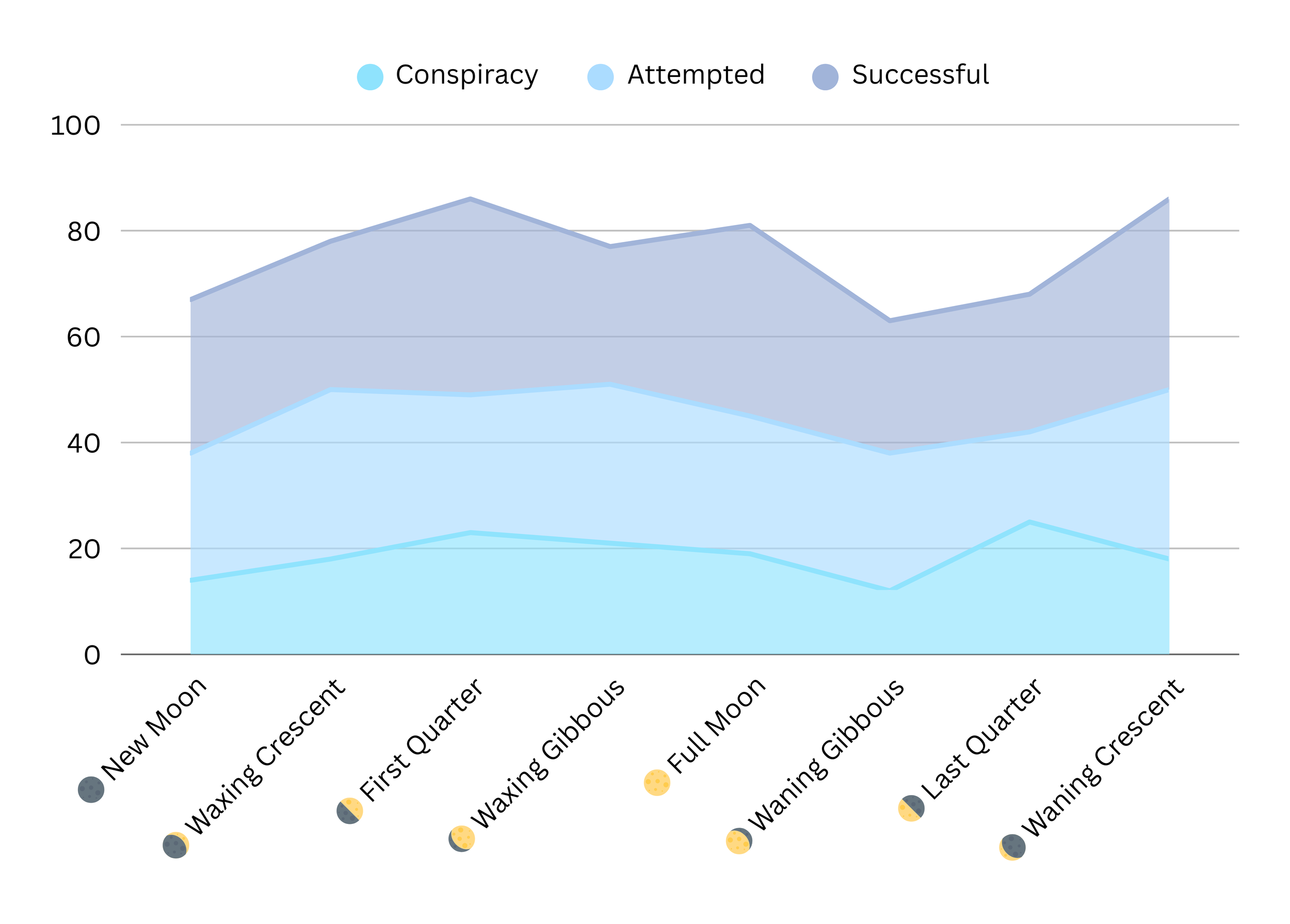
When coup activity is aggregated across outcomes — including successful seizures of power, failed attempts, and conspiracies — more than one quarter (27%) cluster during a crescent moon.
The chart offers no causal explanation and little visual clarity. Still, the pattern consolidates. Activity increases during periods of partial illumination, when certainty is forming but not complete.
The crescent is a transitional phase.
Apparently, much like power.
Questionable Romantic Decisions
Google searches for “should I text my ex”
Questionable romantic decision-making increases 115% during the Waning Crescent phase, according to Google search behavior.